
Rose petals are steeped in water to create this flavor-infused liquid. It is the hydrosol component of the rose-petal distillate, a by-product of the process used to make rose oil for perfume. In Asia and Europe, rose water is also utilised for medicinal, cosmetic, and religious purposes.
A nourishing mixture of Triphala (Amalaki, Bibhitaki, and Haritaki), Tulsi, Shallaki, Chandan, Khus, Gulab, and Narangi Phool plant waters and vegetable oils serve as the base for oil droplets of Indian Frankincense, Jasmine, Myrrh, and Wheat germ, which remove impurities from the skin’s deepest layers without irritating the skin. Additionally, these plant fluids effectively remove makeup while also hydrating, toning, and soothing skin that has been damaged by pollution.
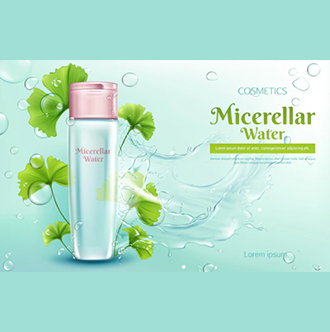
A quick and simple approach to clean your skin is using micellar water. The product can be used as follows:
1. Apply micellar water on a cotton pad. On a makeup removal pad, cotton ball, makeup wipe, or soft washcloth, apply micellar water.
2. Use the damp pad to gently clean your face. To remove perspiration, sweat, dirt, or makeup, slide the pad across your skin. To aid in the application of waterproof mascara and eye makeup, gently push the pad into the skin for a short period of time. Depending on the size of the pad and the quantity of makeup or buildup on your skin, you might need to use numerous pads.
3. Use another facial cleanser or dry with a fresh towel. Using micellar water to complete the cleaning step of your skincare regimen and patting your face dry with an old towel are two options. You may also use micellar water as the first step of a double-cleanse regimen. To do this, use your preferred face cleanser, such as a foamy solution or creamy cleanser, after performing a micellar cleanse. Apply lotion or another type of moisturiser to finish.


 English
 Japanese
Reviews
There are no reviews yet.